Sewer Line Excavation and Pipe Replacement in Akron
Key Takeaways: What Sloping Ground Changes About a Sewer Excavation
- A line that keeps backing up after cleaning: when a drain has been cleared twice and fails the same way, the fault is usually in the pipe itself, and a camera inspection is what separates a dirty line from a broken one.
- Video before equipment: nothing in Akron gets dug until the recording shows a collapse, a separated joint, a belly holding standing water, or roots coming in through a break.
- Grade feeds the method question: depth of cover, pipe material, and the room available for a machine and a spoil pile all decide between an open cut and a trenchless sewer line replacement.
- Pipe bursting and lining are conditional: both need working room at each end and a host pipe in the right condition, so neither is sold as an upgrade tier.
- Utility locating comes before the machine: gas, water, electric and telecom are marked and confirmed, and anything crossing the run is opened by hand.
- Backfill is half the repair: loose fill drains faster than the glacial till around it, so on the sloping lots Akron is full of, a trench has to be compacted in lifts or it turns into a channel.
- Roto-Rooter pulls the permit and books the inspection: the paperwork is part of the job, and the limits of surface restoration are settled in writing before anyone starts.
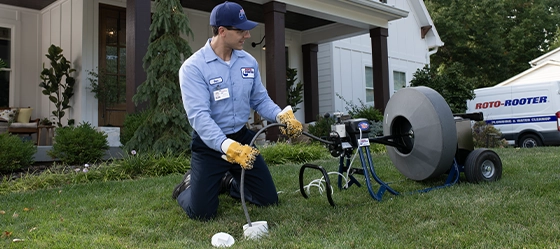
Akron was built across the edge of a plateau and the streets still show it. The ground falls away toward the river valley in long steps, which makes this one of the more vertical cities in Ohio, and a large share of the housing here sits on lots with real grade: a driveway that climbs, a back yard that drops, a garage tucked into a bank. All of that fall is useful while the sewer lateral underneath is sound, because gravity is doing the work the pipe was designed around. It turns into the central question the moment the pipe has to come out of the ground.
Excavation is the repair that gets reached last. Almost everybody who lands on this page has already had the line cleared at least once, watched it fail again, and been told the problem is structural. What follows is how that conclusion gets tested, what decides between an open cut and a trenchless replacement, who is responsible for which part of the run, and what the ground looks like when the crew leaves. Every one of those answers moves with the grade, and in Akron the grade is rarely flat. If the line is blocking rather than breaking, Drain Cleaning in Akron is the cheaper and faster place to start, and a technician will say so.
Operated as an Independent Contractor - All available services, hours of operations, pricing structure, and guarantees may vary by location
Serving the entire Akron metro area, Including:
Counties in the Akron Metro Area
Backfill, Compaction and the Path Water Takes Afterward
The stage of a sewer excavation that gets the least attention is what happens after the new pipe is in, and on sloping ground it is the stage most likely to come back as a complaint. A trench is a strip of loosened soil cut through ground that has been sitting undisturbed for decades. Dense glacial till, which is what most of Akron sits on, moves water slowly. A trench full of loose backfill moves it quickly. Put those two side by side on a lot that falls toward the house and a channel has been built, and the first wet spring will find it.
So backfill goes in and gets compacted in lifts instead of being pushed back in one pass, the surface is left slightly proud so it settles to grade instead of below it, and the run is shaped so surface water crosses the trench line instead of running along it. Handled properly, the lawn over a trench in Akron is invisible inside a growing season. Handled carelessly it becomes a soft stripe that collects runoff and delivers it to the lowest point on the property.
The rest of the surface question deserves a straight answer, because slopes in Akron rarely make restoration simple. An open cut in a yard means the sod, the soil and whatever was growing over the line all come up. A cut through a drive or a public walk means concrete or asphalt is removed and put back as a patch. Backfill, compaction and a clean patch are part of the work. Replanting a bed, rebuilding a paver drive or matching decorative stone is separate, and where that is what the surface needs it is scoped and written down on site before a machine arrives.
Marking Gas, Water and Power Before the First Cut
Utility locating happens before every dig and it is not a formality. Gas, water, electric and telecom all share the corridor a sewer lateral runs through, and in the older parts of Akron those services went in across many decades with records of uneven quality. The locate is called in, the marks go down, and wherever a marked line crosses the run the soil around it is opened by hand instead of by bucket. A crew that treats this as paperwork is gambling with somebody's gas service.
Which Part of the Sewer Run Is Yours
The pipe running from the house out to the sewer in the street is the sewer lateral, and in most places, Akron included, the property owner is responsible for it. How far that responsibility extends is decided locally: some jurisdictions draw the boundary at the property line, others carry the owner's responsibility all the way to the connection at the public main. Your municipality decides where that line falls, and it is worth confirming before the scope is written, because it changes which part of the run is yours to pay for. Roto-Rooter works on the private lateral. The main in the street belongs to the utility and Roto-Rooter does not work on it.
Permits and Inspection on a Residential Dig
Replacing a lateral is permitted work and it is inspected. Roto-Rooter pulls the permit, books the inspection and keeps the documentation, so the repair sits on record for the next title search and the next owner. The requirements, the review and the scheduling belong to the jurisdiction covering your address in Akron, so nothing on this page promises an approval window or a number of days on site.
Living With the Line Until the Crew Arrives
A lateral that is failing structurally will not behave itself until it is repaired. Keep laundry and dishwasher loads light, watch the lowest fixture in the house for the first sign of trouble, and call as soon as water starts coming up instead of going down. If it backs up before the dig is scheduled, Emergency Plumbers in Akron answer 24/7, 365 days a year. If water has already reached finished space, Water Damage Restoration in Akron covers the cleanup. Everything this location offers is listed on the Akron plumbing page.
Schedule a Sewer Excavation Assessment in Akron
If a line has been cleared more than once and keeps coming back, the next step is video, not another cable. Call 330-860-9883 to book a camera inspection, or schedule online and pick a window that suits the household. Roto-Rooter is fully licensed and insured, provides on-site estimates before any work begins, and will tell you plainly when a line in Akron can be cleaned instead of replaced.

What the Camera Has to Show Before Anyone Breaks Ground
Open-Cut, Pipe Bursting and the Room a Hillside Lot Does Not Have
