Sewer Line Excavation and Camera Diagnosis in Antioch
Key Takeaways: Why a Failing Sewer Line Gives No Warning in Antioch
- A yard with no wet patch and no sunken strip proves nothing in Antioch, because water leaving a broken pipe goes down into the rock and never reaches the surface.
- The ground under this part of Tennessee is limestone at shallow depth with solution channels running through it, under a thin residual soil that offers little cushion around a buried pipe.
- Camera inspection is the only honest way to decide. It shows a collapse, an offset joint, a belly holding water or root intrusion, and it puts a depth and a location on the defect.
- Rock changes the dig across Antioch. A trench that meets ledge needs different equipment and a different pace, and it limits how much the grade of a run can be re-cut.
- Trenchless has conditions attached. Pipe bursting displaces material outward, which is easy in soil and unforgiving where rock sits tight against the pipe.
- Utility locating happens before any ground opens, every time, on every job.
- Roto-Rooter is fully licensed and insured, handles the permit and the inspection, and gives you an on-site estimate before any work begins.
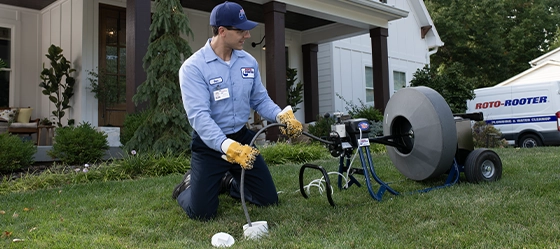
Homeowners are told to watch the yard for a failing sewer lateral. A soft patch that stays wet in a dry week, a strip of grass greener than everything around it, a shallow trough where the ground has settled along the pipe run. In Antioch those signs are unreliable, and the reason sits a couple of feet under the topsoil. This is Nashville Basin country: limestone close to the surface, shot through with solution channels, carrying a thin layer of residual clay on top of it. Water escaping a cracked pipe finds a path down into the rock and keeps going. The lawn stays exactly as it was.
So the diagnosis in Antioch has to come from inside the pipe. By the time a household in Antioch is reading about sewer line excavation, the line has usually been cleared at least once and has gone back to the same behavior, and the useful question has moved from how to unblock it to what is wrong with it.
Rock Close to the Surface Changes What Excavation Means
Shallow limestone affects this work in three ways, and all three show up in the estimate rather than in the sales pitch. The first is the material a trench has to get through. Where a run crosses ledge, the ground has to be broken rather than scooped, which means different equipment on site and a slower pass. The second is depth. A lateral in Middle Tennessee sits above frost concerns that govern northern markets, so cover is generally modest, and where rock is close the original installer had little room to choose an ideal line. The third is grade. Re-cutting a bed to correct a sag is straightforward in soil and a real piece of work in rock, so the fix that a camera recommends has to be checked against what the ground will allow.
How do you know a sewer line is broken when nothing shows above it?
You put a camera down it. A camera inspection runs the sewer lateral from a cleanout and records what is there, with a locator putting the defect on the ground surface and giving its depth. That footage answers the questions that actually drive the decision.
- Type of defect: a crack, an offset joint, a crushed section, roots through a seam or a belly holding standing water each call for different work.
- Extent: one bad joint in an otherwise sound line is a spot repair, while deterioration along the whole run points at full sewer line replacement.
- Depth and position: how far down the defect sits and what is above it, since a driveway, a walk or a mature tree changes the approach.
- Whether trenchless can follow: enough intact pipe has to remain for a liner or a bursting head to track.
There is a second reason the surface misleads people in Antioch. Where soil washes down into a void in the limestone, the ground above can settle in a small area with nothing wrong with the pipe at all, and a homeowner reads the dip as a sewer problem. It can also work the other way, dropping support out from under one length of pipe and putting a point load on a joint. Both cases look the same from a lawn chair, and only the footage separates them.
Operated as an Independent Contractor - All available services, hours of operations, pricing structure, and guarantees may vary by location
Serving Antioch and surrounding communities, Including:
Counties in the Antioch Area
Your Sewer Lateral, the Public Main, and Who Answers for Which
The sewer lateral is the privately owned pipe between the building and the public main. As a rule the property owner is responsible for the lateral and the public system is responsible for the main, but the exact handover point is set by local ordinance and varies between jurisdictions. Some carry owner responsibility to the connection at the main. Others end it at the property line or the curb. Antioch sits inside Davidson County and the answer for your address comes from the authority that owns the main under your street, so the crew confirms it before scoping anything. Roto-Rooter works the private side of that boundary. Municipal main work belongs to the public system and we do not take it on.
What a Sewer Line Excavation Looks Like Once the Footage Justifies It
The run is located and marked, the utilities are cleared, and the ground opens only across the length the inspection supports. The failed section comes out, the bed is prepared, the new pipe is laid and tested, and a cleanout goes in where future access will be easiest. Backfill returns in compacted lifts. Where rock was broken to reach the pipe, the bedding material around the new line matters more than usual, because a pipe sitting directly on an uneven rock surface carries its load at points instead of along its length. Getting that right is the difference between a repair that lasts and one that develops a crack at the same spot in a few Tennessee winters. Antioch does not freeze the way a northern market does, but it cycles through enough wet and cold to find a badly bedded pipe.
Keeping the House Usable While the Repair Is Arranged
Permitting, locating and scheduling take time, and a household still has to run. Roto-Rooter is available 24/7, 365 days a year, and a crew can keep a failing line moving while the replacement is set up. The company has been solving sewer and drain problems since 1935, and on a job this size the plumbing peace of mind comes from evidence rather than from a promise. Everything else we handle here is on the Roto-Rooter page for Antioch.
Call for a Camera Inspection Before Anyone Digs in Antioch
If a line in Antioch keeps failing in the same place and the yard shows nothing, that combination is normal for shallow-limestone ground in Tennessee and it is a reason to look inside the pipe. Call 615-373-0373 to book an inspection, or schedule online, and you will have an on-site estimate before any work begins.

Sewer Line Replacement in Rock: Open-Cut and the Trenchless Alternatives
Marking the Utilities Before Any Ground Opens
