Sewer Line Repair in Austin, TX
Expansive Clay and Live Oak Roots Put Austin Sewer Lines Under Constant Pressure
Austin sits on the Blackland Prairie and Edwards Plateau geological zones, where expansive clay soil dominates the landscape beneath every residential neighborhood. This clay absorbs moisture during Central Texas downpours and swells significantly, then contracts and cracks during the long dry stretches that regularly push summer temperatures past 100 degrees. That constant cycle of expansion and contraction shifts the ground around buried sewer lines, cracking rigid pipe materials and pulling joints apart over time.
The city's celebrated live oak canopy compounds the problem. Mature live oaks, pecans, and cedar elms send root systems outward in search of moisture, and a hairline crack in a sewer pipe joint becomes an open invitation. Many Austin homes built between 1950 and 1985 still rely on original cast iron or clay tile sewer laterals that were never engineered for decades of soil movement and root pressure.
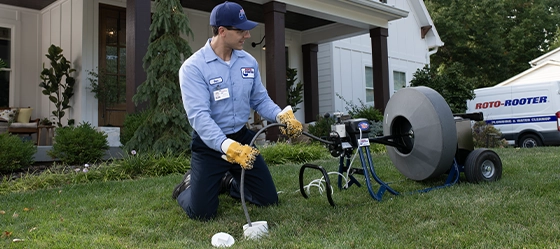
Roto-Rooter provides comprehensive sewer line repair throughout Austin, TX. Our experienced plumbing technicians understand the challenges that expansive Blackland Prairie clay, aggressive live oak roots, and aging pipe materials create for residential and commercial sewer systems across the city.
- Full sewer line inspection, repair, and replacement: Covering all pipe materials found in Austin homes
- Trenchless repair options: Preserve your landscaping and hardscaping
- Video camera inspection: Pinpoint damage location and severity without excavation
- Root removal and preventive treatments: Clear blockages and seal entry points
- Available 24/7, 365 days a year: Emergency sewer response when you need it most
Call Roto-Rooter at 512-258-3008 or schedule your sewer line service online.
Customer Testimonials
How Blackland Prairie Clay and Austin's Growth Patterns Damage Sewer Lines
Austin's sewer line failures follow predictable patterns driven by the city's geology, vegetation, and construction history. Recognizing these causes helps property owners identify trouble before a small crack becomes a full sewer backup.
- Expansive clay soil movement: Austin's Blackland Prairie clay absorbs water and expands by as much as 15 percent, then shrinks during drought. This annual cycle shifts buried pipes, cracks terracotta at the joints, and separates cast iron connections. Properties near Shoal Creek and along the eastern plateau edge experience some of the most aggressive soil movement in the metro area.
- Live oak and pecan root intrusion: Austin's protected heritage trees send extensive lateral root systems across residential lots. These roots actively seek the moisture inside sewer pipes, entering through deteriorated joints and growing into dense mats that reduce flow to a trickle. Neighborhoods with mature canopy like Travis Heights, Tarrytown, and Allandale face persistent root intrusion pressure.
- Aging cast iron and clay tile pipes: Homes constructed during Austin's mid-century growth boom typically have cast iron drain stacks and clay tile sewer laterals. Cast iron corrodes from the inside after 40 to 60 years, developing rough surfaces that trap debris. Clay tile joints loosen as soil shifts, creating gaps where roots and groundwater enter.
- Drought-to-flood cycles: Central Texas alternates between extended drought and intense rainfall events. These extreme moisture swings amplify clay soil movement and stress pipe joints far more than gradual seasonal changes.
Austin Neighborhoods Where Sewer Lines Face Elevated Risk
Sewer line condition varies across Austin based on construction era, pipe materials, soil composition, and tree density. Certain neighborhoods face heightened risk due to the combination of aging infrastructure and challenging ground conditions.
- Travis Heights and Zilker: Homes from the 1930s through 1950s sit on steep terrain with clay tile laterals running through dense live oak root zones. The combination of grade changes and mature trees makes these areas prone to root blockages and pipe displacement.
- Allandale and Crestview: Post-war construction from the 1950s and 1960s means cast iron and clay pipes are now 60 to 70 years old. Large pecan and live oak trees line residential streets, sending roots directly into aging sewer connections.
- East Riverside and Montopolis: Blackland Prairie clay is particularly aggressive in this low-lying area east of I-35. Homes built during the 1970s and 1980s have laterals that have endured decades of soil expansion and contraction.
- Circle C Ranch and Shady Hollow: Edwards Plateau limestone beneath these 1990s neighborhoods limits burial depth, and cedar root systems find their way into pipe joints where soil cover is thin.
Warning Signs Your Austin Sewer Line Needs Professional Attention
Sewer line damage develops gradually as pipes age, roots grow, and clay soil shifts through seasonal cycles. Catching these warning signs early can prevent a minor crack from becoming a full sewer emergency.
- Multiple slow drains throughout the house: When several fixtures drain slowly at the same time, the problem is in the main sewer lateral rather than individual drain branches.
- Sewage odors in the yard: A cracked or separated sewer pipe leaks sewage into the surrounding clay soil, producing noticeable odors near the ground surface.
- Unusually green or lush patches in the lawn: Sewage leaking from a damaged line fertilizes the soil above it, creating strips of grass that grow faster and greener than surrounding areas.
- Gurgling sounds from drains or toilets: Air trapped in a partially blocked sewer line escapes through fixture drains, producing gurgling or bubbling sounds during water flow.
- Sewage backups through floor drains: Raw sewage backing up through the lowest drains in the house signals a serious blockage or collapse in the main sewer line.
- Foundation movement or new cracks: A leaking sewer line saturates and erodes the clay beneath your foundation, accelerating the settling that Austin's expansive soils already cause.
Serving the entire Austin metro area, Including:
Counties in the Austin Area
What to Expect During Your Sewer Line Service Call
Roto-Rooter's repair process is designed to identify the exact problem and deliver the right solution on the first visit whenever possible.
- Initial assessment: Your technician reviews the symptoms, checks accessible cleanout points, and evaluates the property layout and soil conditions.
- Video camera inspection: A waterproof camera feeds through the sewer line, revealing cracks, root intrusion, collapse, and buildup without guesswork.
- Diagnosis and options: Your technician explains the damage, recommends the most effective repair method, and provides a clear cost estimate. You approve the work before anything begins.
- Repair execution: Roto-Rooter's plumbers complete the repair using the agreed-upon method - hydro jetting, conventional excavation, trenchless lining, or pipe bursting - based on damage type and soil conditions.
- Verification and cleanup: A follow-up camera inspection confirms proper flow. The work area is restored, and your technician provides guidance on protecting your sewer line going forward.

Same-Day Sewer Line Repair in Austin
Call Roto-Rooter for Sewer Line Repair in Austin - Available 24/7

SPECIAL FINANCING AVAILABLE
We have partnered with Synchrony Bank to offer financing options to make your plumbing repair expenses as convenient and stress-free as possible.