Sump Pump Repair and Installation in Buffalo
Key Takeaways: What Weeks of Snowmelt Ask of a Sump Pump
- The hard season here is not one storm. A snowpack that took months to build releases over weeks, so the pump runs thousands of short cycles in a stretch when nothing dramatic appears to be happening.
- Run hours decide when a pump is finished, not the calendar. Two identical units installed in the same week can be years apart in remaining service life because one of them sits under a wetter corner of the lot.
- Where the discharge line ends matters as much as the pump does. Sump water routed into a line meant to carry waste is an inherited mistake that comes back during the exact conditions the pump was bought for.
- A pit cut into an old stone foundation draws from the wall as well as the floor, which is why some pits in this housing stock never sit fully empty.
- Ice storms take lines down for longer than a summer outage lasts, so a battery backup here needs to be sized for a night rather than for a shower.
- A tired check valve drops the water in the discharge pipe straight back into the pit, and the pump answers by cycling itself to an early death.
- Roto-Rooter is fully licensed and insured and answers in Buffalo 24/7, 365 days a year.

Snow that fell in November can still be leaving the ground in March. That is what separates Buffalo from most of the country: the water does not arrive all at once, it arrives slowly and it keeps arriving, and equipment that would shrug off a summer cloudburst in another part of New York can be worn out here by a patient February.
How Long Can a Sump Pump Run Before Something Gives?
Every pump is built to a duty cycle, which is a limit on how much of any given hour it can spend running. Nothing in the specification says the machine will refuse to exceed it. It simply runs hot, the thermal cutout starts interrupting, the seals harden and the bearings go. A unit that switches on eight or ten times an hour for six weeks of melt has done more work in that stretch than a pump in a dry climate does in several years, and it ages accordingly.
This is why age alone is a poor guide in Buffalo. The useful question is not how many winters the pump has seen but how many hours it has actually turned, and the answer is written in the sound it makes and the length of time it takes to clear the pit. A unit that used to empty in twenty seconds and now takes fifty has told you something, and it has told you before the floor did.
What Fails First When the Pump Never Gets a Rest
The float switch usually goes first, because it is the part with the highest cycle count and the least protection. It drifts against the pit wall, catches on the discharge pipe, or fouls on the fine grit that comes in with meltwater, and the pump never receives the signal to start. Silence during a wet week is almost always this. A clogged intake screen produces the same silence from the opposite end, except the motor is running and nothing is moving.
A seized impeller announces itself with a hum. A failed check valve is quieter and more expensive, because the column of water in the discharge pipe falls back the instant the motor stops, the pit refills, the pump restarts, and the short cycling burns through a duty cycle that had years left in it. The fifth failure is not a failure of the pump at all. An ice storm brings down the lines, and a machine in perfect condition sits in a filling pit with no electricity reaching it.
Serving the entire Buffalo metro area, Including:
Counties in the Buffalo Metro Area
Where a Sump Pump Is Allowed to Send Its Water
Lifting water out of the pit is the easy half. Getting rid of it is where older properties in Buffalo run into trouble, and it is worth being blunt about the arrangement New York inspectors still find in house after house. In a lot of houses of this era the sump discharge was tied into the line that carries waste out of the building, because it was close and it worked on the day it was done. Municipalities across this part of New York generally do not permit that, and the reason is practical rather than bureaucratic: during a long melt every property doing it is pushing clear water into a system that is already at its limit, and a system at its limit backs up into the lowest fixture it can find.
The alternative is a line that discharges to grade and carries the water far enough from the wall that it does not soak straight back down to the drain tile and return to the pit. A short run, a slope that leans toward the house, or a termination point sitting against the foundation creates a loop in which the same water is moved again and again until the motor gives up. If nobody has ever traced the line on your property from the pit to its outlet, that is the single most useful hour anyone can spend on this system.
When Continuous Running Is Normal and When It Is Not
Pit sizing gets almost no attention and explains a surprising share of the complaints Buffalo homeowners bring to this equipment. A sump pit that is too small refills before the motor has finished cooling, so the pump starts and stops constantly and eats its duty cycle in weeks. A pit that is too large lets water stand until it goes stale and drops sediment onto the intake. Neither extreme looks dramatic, and both quietly shorten the life of the equipment sitting in them.
Continuous running during the peak of a melt can be entirely normal, and that is worth saying, because Buffalo homeowners ask about it every year. The pump is doing its job at the rate the ground is setting. What is not normal is continuous running in a dry, frozen stretch, or a run time that has grown for the same conditions, or a motor that runs hot enough to trip its own cutout and go quiet for twenty minutes at a time. Those three are diagnoses, not habits.
Battery Backup for an Outage Measured in Days
The most common real gap in Buffalo is not a worn pump, it is a house with no second source of power. A battery backup is a second pump with its own supply, and it matters here because the storms that saturate the ground are the same storms that put ice on the lines and take the grid down, sometimes for longer than a day. Be precise about what it buys. It carries a pit through an outage of hours, and how many hours depends entirely on how fast the water is arriving. It is not indefinite, it is not a substitute for replacing a primary pump that is failing, and a high-water alarm alongside it is worth more than most people expect, because it turns a discovery into a warning.
Test It in the Fall, Not in March
Pour a bucket of water slowly into the pit until the float switch lifts. The pump should start, clear the pit, and stop cleanly without restarting a second later. Listen for a hum with no flow, watch whether the water level jumps back up the moment the motor cuts out, and time how long the run takes so you have a number to compare against next time. Do it twice a year, and in western New York do the important one in autumn, while the outlet is still visible and the ground is still open.
What that test cannot tell you is whether the pump can keep up under real load, whether the discharge line is clear along its whole length, or whether anything at all happens when the power is out. Those need somebody looking at the installation as a system rather than at the machine in isolation.
A Pump Moves Water. It Does Not Seal a Wall.
Repair, replacement, new installation, backup systems, discharge line work, check valve replacement and diagnosis of the whole pit are all things Roto-Rooter handles. Foundation waterproofing, exterior excavation and structural repair are a different trade and we do not perform them. That distinction matters here more than in most places, because on a wet Buffalo lot it is genuinely possible to solve nothing by installing a bigger pump. A pump manages water that reaches the pit. It does not stop water from reaching the house, and any honest description of one says so.
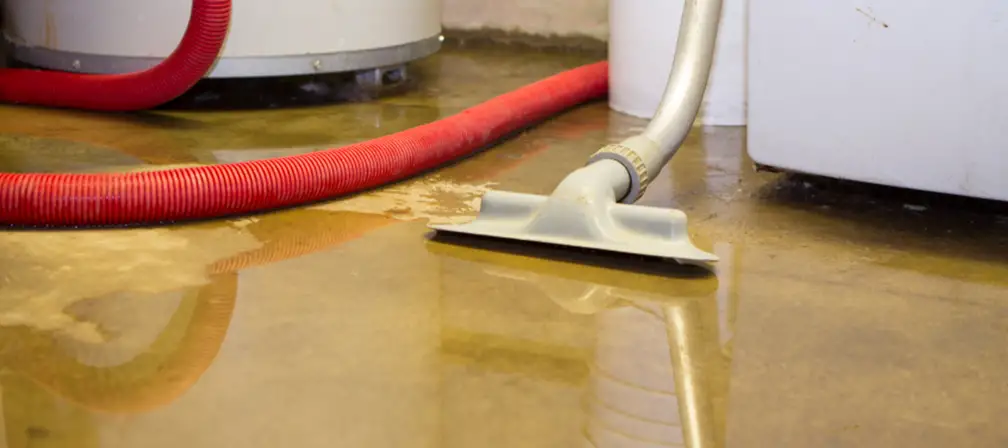
Where water has already come across the floor, the cleanup is its own job. See Buffalo water damage restoration for that work, and the Buffalo plumbing page for everything else this team does.
Book a Sump Pump Inspection Before the Snow Piles Up
Roto-Rooter has worked on New York plumbing since 1935 and is fully licensed and insured. Call 716-648-5082 or schedule online to have the pit, the pump, the float switch, the check valve and the outlet of the discharge line looked at as one system. Roto-Rooter provides on-site estimates before any work begins and answers 24/7, 365 days a year, which is when this equipment tends to ask for attention. Going into a Buffalo winter with a tested pump is the plumbing peace of mind worth having.

The Six Symptoms That Come Before a Wet Floor
Why the Hardest Month Here Has No Rain in It
SPECIAL FINANCING AVAILABLE
We have partnered with Synchrony Bank to offer financing options to make your plumbing repair expenses as convenient and stress-free as possible.