Sump Pump Repair, Replacement and Backup Systems in Charlottesville
Key Takeaways: The Only Report This Equipment Files Is Water on the Floor
- A failed sump pump announces nothing. It sits in the pit looking exactly the same as a working one, and the household finds out during the storm that needed it.
- Five gallons of water poured slowly into the sump pit is a complete test, and it takes a household about as long as making coffee.
- The steadiest work a pit does in Charlottesville comes in the leaf-off months, when dormant trees and low evaporation leave rolling Piedmont ground charged for weeks at a time.
- Most service calls come down to a small number of parts: a float switch that has caught on something, a blocked intake, a seized impeller, or a check valve letting the discharge line drain straight back down.
- A high-water alarm is the cheapest thing on this list and the only component whose entire purpose is to tell you the system has lost.
- Battery backup covers the failure the primary pump cannot: an outage during the ice or the thunderstorm that put groundwater into the pit in the first place, which is a routine event across central Virginia.
- Roto-Rooter repairs, replaces and installs this equipment and provides on-site estimates before any work begins.

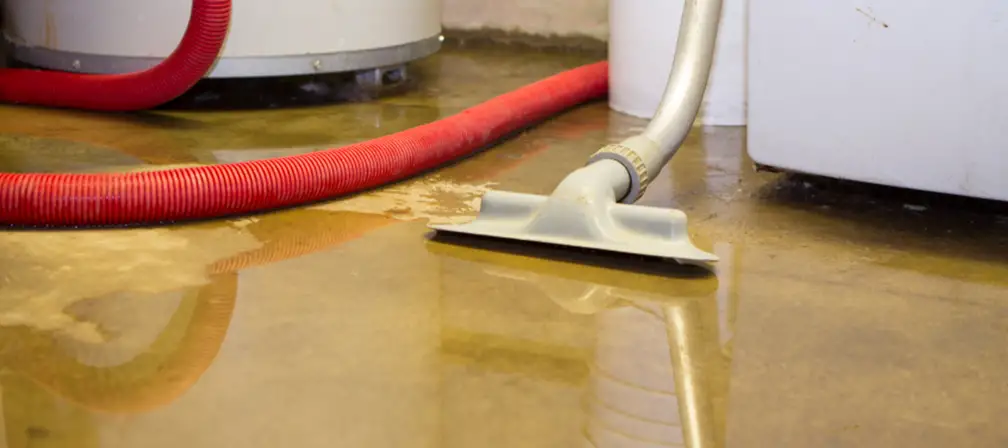
Almost every machine in a house tells you when it has quit. The furnace stops producing heat, the water heater produces cold water, the refrigerator warms up and somebody notices within a day. A sump pump has no such courtesy. It sits under a lid in a hole in the floor, drawing no attention when it works and none at all when it stops, and the first report a household in Charlottesville gets is a wet floor during the exact weather that made the pump matter.
That asymmetry is the reason this page is organized the way it is. Repair and replacement matter, and they are covered below. But the question worth answering first is simpler and almost nobody asks it: how do you know the thing works right now, on a dry day, while there is still time to do something about the answer?
There is a local reason the question has a deadline. Charlottesville sits on rolling ground at the eastern edge of the Piedmont, under the Blue Ridge Mountains, on red clay over weathered rock that lets water down slowly. Through the leaf-off months the trees are dormant and evaporation is low, so rain that would vanish in July stays in the ground in February and keeps arriving at the footing drains for days. That, and not the summer thunderstorm everybody pictures, is when the pit in a Virginia house does its longest and most unglamorous work.
How do I know my sump pump is still working?
Lift the lid and look at the pit, then pour water in until the float rises. A working pump starts before the water reaches the top of the sump pit, moves it out briskly and shuts off cleanly with no second start a few seconds later. Water that runs back down into the pit after shutoff points at the check valve. A pump that hums and moves nothing points at the impeller or the intake. A pump that does nothing at all points at the float switch or the power to it. Those four outcomes cover the large majority of what Roto-Rooter's plumbers find in Charlottesville, and a homeowner can reach all four with a bucket.
Operated as an Independent Contractor - All available services, hours of operations, pricing structure, and guarantees may vary by location
Serving the entire Charlottesville metro area, Including:
Counties in the Charlottesville Metro Area
The pit is part of the equipment, and it is usually the older part
Charlottesville housing spans a long stretch of building history, and the below-grade spaces underneath show it. In the newer subdivisions around the city the pit was designed into the house, tied to a perimeter drain, sized for the footprint and fitted with a lid. In much of the older Charlottesville stock the pit was cut in later, sometimes decades after the house was finished, and it was sized for whatever the situation looked like on the day somebody dug it.
That history matters when a pump is being replaced, because pit and pump are one system. A pit too small for the water arriving forces short cycles no pump will survive for long. A pit far larger than it needs to be lets water stand for long periods, which brings its own problems in an enclosed Virginia crawl space or lower level. A pit with no lid takes in debris, loses moisture into the room above it, and gives a float something to catch on. A plumber looking at a replacement will read the pit before choosing the pump, and if the pit is the constraint, will say that plainly.
What wears out, and what it looks like when it does
A sump pump is a motor, an impeller, a switch and a valve, and each fails in a way a person can recognize. The float switch is first by a wide margin, either obstructed or worn to the point where it no longer makes contact reliably. The intake screen clogs with silt and the pump runs while the level barely moves. An impeller seizes or loses a blade, which sounds like a running motor and produces no flow. A check valve fails open and the pit refills from the discharge line on every cycle. And the whole assembly reaches the end of its service life, at which point the sensible move is replacement instead of a third repair on a unit that has already told you what it thinks.
Replacement in Charlottesville is also the moment to fix things the original installation left behind: a pit sized for a smaller house, a discharge line that ends too close to the wall, an extension cord standing in for a proper outlet, or the absence of an alarm. None of that is upselling. It is the difference between a new pump in an old problem and a system that will hold.
If the pump has already stopped and water is coming up while you read this, that is a different call. An emergency plumber in Charlottesville is the right route at that point, and the Charlottesville plumbing page lists everything else the local team covers.
Request a Sump Pump Assessment in Charlottesville
Call 434-244-3144 to have the pump, the pit, the check valve and the discharge line looked at together, or schedule online for a time that suits you. Roto-Rooter is fully licensed and insured, answers 24/7, 365 days a year across Charlottesville and central Virginia, and provides on-site estimates before any work begins. Getting this settled in a dry week costs a household far less trouble than discovering it in a wet one.

Sump Pump Checks a Household Can Do Without Any Tools
The Alarm, the Backup, and the Failures Neither One Covers