Hydro Jetting in Columbus
Key Takeaways: Old Clay Tile Under a Metro That Keeps Digging
- Mortar, tile slurry, joint compound and trench sand all set hard inside a pipe, and a cable will ride over a deposit like that rather than remove it.
- Hydro jetting cuts and scours the pipe wall around the full circumference of the sewer line, which is why set material and coatings answer to it.
- A line that clogs again within a few months was never actually cleaned. The channel a cable opens closes at the rate the buildup formed.
- Debris, grease, mineral scale and root hair left after a cutter head are four different findings, and a video camera inspection is what separates them.
- The camera runs before the hose, to prove the pipe can take pressure and to find the cause, and again afterward to show the wall is clear rather than merely open.
- A collapsed or badly offset pipe is not a jetting candidate, and pressure does not turn a broken line into a working one.
- Older streets close to the center of Columbus still run clay tile laterals in short sections, which behave differently from the plastic in a newer subdivision.
- Roto-Rooter is fully licensed and insured, and answers in Columbus 24/7, 365 days a year.
Mortar sets just as well inside a pipe as it does in a wall. That single fact explains a category of blockage that surprises people: the line was fine, then a bathroom was redone or an addition went on, and within a year the run began backing up at the same point every time. Tile slurry, grout washings, joint compound rinsed out of a bucket, sand from a trench, even a little concrete from a cut all go down as liquid and stop being liquid downstream. What they leave is not a clog sitting in the pipe. It is a hard, rough ledge bonded to the pipe wall.
Why a Cable Rides Over It
A cable is a boring tool and it follows the path of least resistance. Against soft material it works, punching a channel through the middle and restoring flow. Against a set deposit fused to the wall it does something less useful: the head skates across the surface, catches nothing, and comes back looking like the line is clear. Flow improves a little because the water is now finding its way around the ledge. Nothing has been taken out.
That is the distinction that matters when somebody in Columbus has had the same run snaked three times and been told each time that it is open now.
What Hydro Jetting Does to a Set Deposit
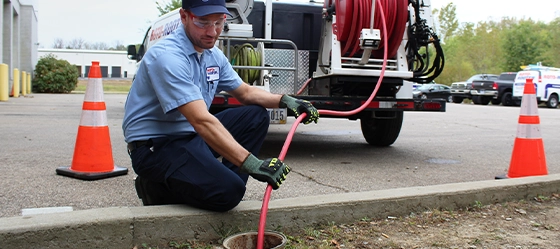
A nozzle on the end of a hose throws high-pressure water backward against the pipe wall while the hose is drawn along the sewer line. The cleaning happens across the full circumference instead of through the middle, and loosened material travels back toward the access point rather than downstream toward the main. Sand and construction fines wash out. Grease that cooled along the crown lifts. Mineral scale in older cast iron is cut back toward the original bore, which is the descaling part of the work, and root hair remaining at a joint after a cutter head is stripped away. Hardened mortar and grout are the hardest case and depend on how thick they are and how well they bonded, which is a judgment made from the footage rather than from the driveway.
Serving the entire Columbus metro area, Including:
Counties in the Columbus Metro Area
The Point Where Cleaning Becomes a Repair Estimate
A remodel can put material into a line. It can also crack one. Three findings take it off the table. A collapsed section has no bore left to clean. A joint badly out of line will catch the hose, and the problem there is structural rather than dirty. A wall already thinned by long corrosion may not survive pressure, and the inspection is what shows that in advance. Jetting cleans a pipe and does not repair one, and any company blurring that line is selling rather than diagnosing.
Where the camera finds one of those, the answer is a repair conversation that starts from the footage already recorded. For a lateral running out under a tree lawn in Columbus that may mean a trenchless approach rather than an open trench across the yard, and that is a separate job with its own estimate.
How Do You Tell Debris From Ordinary Buildup?
Sometimes, and the honest answer starts with a camera. A thin skim of slurry usually comes off. A thick plug of set concrete in a small-diameter run may not, and in that case pressure alone is not the answer and a mechanical approach or a spot repair enters the conversation. What the inspection establishes is which of those you have, and the difference is worth knowing before anyone commits to a method.
Restaurants, Rentals and Lines That Foul on Their Own Clock
A house lateral and a commercial kitchen run differ in diameter, in load and in what a failure costs. A residential line in Columbus cleaned back to the wall can go years before it needs attention, and what caused the buildup decides how many. A Columbus kitchen pushing fat and food solids through the same pipe every day is working against a measurable rate, which is why operators across Ohio tend to set an interval instead of waiting for a backup during service. Student and multi-tenant rentals sit in between: heavier use than a family home, less predictable than a restaurant.
For work that is not this service, the Columbus plumbers page is the place to start.
Timing the Work Around a Project
The cheapest version of this problem is the one caught early. A camera pass at the end of a renovation, before the new floor goes down over the cleanout and before the crew leaves for the next job, shows whether anything got into the line and puts the work on the project rather than on a Sunday six months later. Contractors who spend their careers on older Ohio houses tend to know this. A homeowner managing a remodel in Columbus rarely hears it from anyone, which is why the call usually arrives after the first backup instead of before it.
Where the Rain Ends Up
One more local wrinkle belongs here. On older Columbus properties, roof and yard drainage was sometimes tied into the same pipe that carries waste, an arrangement the city has spent years working to undo. Where it survives, a heavy storm sends grit and leaf litter straight into a sanitary lateral, and that debris settles in the same low spots grease does. A camera pass will show it, and it is worth knowing whether that is what has been filling the line rather than assuming the kitchen is to blame. An Ohio thunderstorm delivers enough water in an hour to move a surprising amount of it.
If a line is backing up right now instead of slowly getting worse, start with emergency plumbing help in Columbus. Flow comes back first, and the cleaning decision follows once the house is usable.
Call About a Line That Keeps Coming Back
Roto-Rooter has been in business since 1935, is fully licensed and insured, and answers in Columbus 24/7, 365 days a year. Call 614-351-0455 or schedule online to get a camera into the line before anybody in Columbus decides what it needs. Roto-Rooter provides on-site estimates before any work begins, and a recorded look inside the pipe is where the plumbing peace of mind actually comes from.

The Buildup Types Behind a Jetting Call
A Metro That Has Not Stopped Building

SPECIAL FINANCING AVAILABLE
We have partnered with Synchrony Bank to offer financing options to make your plumbing repair expenses as convenient and stress-free as possible.