Hydro Jetting in Indianapolis
Key Takeaways: How to Read the Estimate You Were Handed
- Most people arrive at this subject holding a quote with an unfamiliar word on it and no way to judge whether the recommendation is right.
- Jetting and descaling are not two services. Descaling is what the same high-pressure water does when the material on the wall is mineral rather than grease.
- Hydro jetting scours the full circumference of the pipe back to the wall. A cable opens a channel through a blockage and leaves the coating on either side of that channel exactly where it was.
- A recommendation made without a video camera inspection is a guess. Ask what was seen, at what distance, and whether there is footage.
- Grease, mineral scale, sludge in a flat stretch and root hair left after a cutter head are four separate findings, and each one changes the plan.
- Sometimes the honest answer is that the line should not be cleaned. A collapsed length, a badly offset joint, or a wall thinned by corrosion needs a repair conversation, and pressure would be the wrong tool.
- Where a house sits in the Indianapolis metro matters: hard supply water and cast iron in the older neighborhoods make scale a genuine finding, and the postwar ring is mostly plastic pipe where it is not.
- Roto-Rooter is fully licensed and insured, and answers in Indianapolis 24/7, 365 days a year.
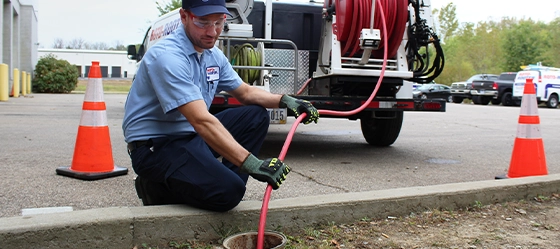
A large share of the people reading about this in Indianapolis are not shopping for a service. They have already had somebody out, they are holding a piece of paper with a word on it they had not encountered before, and they want to know whether the recommendation is sound before they agree to anything. That is a reasonable position to be in and it is badly served by most of what is written about the subject, which assumes the reader has already decided.
So this page is written the other way round. It explains the vocabulary, what the work physically does, what a camera report ought to contain, and the circumstances in which the correct advice is not to clean the line at all. If that leads somewhere other than Roto-Rooter, the information was still worth having.
The Words on the Estimate, in Plain English
Jetting, or hydro jetting, means putting a hose down the sewer line with a nozzle on the end that fires water backward against the pipe wall at high pressure while the hose is drawn through the run. Descaling is the same equipment doing the same thing to mineral deposits, so a quote that lists both is describing one visit rather than two. Cabling, snaking or rodding all mean a spinning steel cable pushed into the line to bore an opening through a blockage. An offset joint is a place where one length of pipe has shifted out of line with the next. A belly is a low spot where the run has lost its fall and holds water. Root intrusion is exactly what it sounds like.
Two of those, the offset and the belly, are conditions of the pipe. The others are things in the pipe. That distinction is the one worth carrying into the conversation, because cleaning addresses the second category and does nothing whatever about the first.
What Hydro Jetting Physically Does Inside the Pipe
The scour covers the whole circumference rather than a hole through the middle of the obstruction, and because the jets face behind the nozzle they drive what they lift toward the main instead of packing it further in. Grease that cooled and set along the crown comes away. Sludge settled in a flat stretch is flushed rather than pushed along. Mineral scale in older cast iron is cut back toward the original bore. Root hair remaining in a joint after a cutter head has taken the mass out is stripped off.
A cable does none of that, and it is not a criticism of the cable. Turned into a blockage it restores flow in minutes, which is the right thing to do when a house is backing up at eleven at night. It simply has no mechanism for lifting material off a wall, so the opening it makes closes again at whatever rate the buildup formed in the first place. Clearing the blockage is the emergency. Cleaning the pipe is what changes the following year.
Serving the entire Indianapolis metro area, Including:
Counties in the Indianapolis Metro Area
When a Recommendation to Clean Is the Wrong One
A recommendation to clean has to survive the footage before it survives anything else. Three findings should stop it outright, and a technician who has actually watched the recording will raise them without being asked. A collapsed section has no diameter left to give back. A joint standing out of line with its neighbor will catch a hose, and what is wrong there is structural. A wall corroded thin may not take pressure at all. If none of those appear on the report you were handed, it is fair to ask whether the camera went far enough to have seen them.
High-pressure water cleans a pipe. It does not restore one, and any quote that implies otherwise is worth a second look. Where the camera has found one of those three, the correct next step is a conversation about the repair options for that specific defect, which under a front yard in Indianapolis may mean a trenchless repair rather than a full open dig. That is a different job with a different estimate, and it starts from footage that already exists.
Does My Line Really Need Descaling, or Just Hydro Jetting?
They are the same visit. The equipment does not change, the method does not change, and the only difference is what is being taken off the wall. If a quote prices them as two separate services on the same run, ask what each one is for and what the camera found that justifies both.
The more useful question is whether scale is what you actually have. Mineral buildup is a finding for older cast iron, particularly in an Indianapolis house that predates the war years. It is not a finding for plastic pipe, and it is not something anybody can assert from the driveway. A technician who names the material, the distance and the pipe type is describing something seen. One who names only a service is describing something sold.
Why the Same Advice Costs a Restaurant More to Ignore
A house lateral and a commercial kitchen run carry different diameters, different daily loads and very different consequences when they close. A cleaned residential line in Indianapolis can go years before it needs attention again, depending on what fouled it, so waiting for a symptom is a defensible plan. A kitchen putting cooking waste through the same pipe every service is working against a known accumulation rate, which is why food service operators across Indiana settle on a planned interval instead of waiting for a failure during a dinner rush.
Roto-Rooter covers both. For the wider set of plumbing work across a property, the Indianapolis plumbers page is the place to start.
What to Ask Before Anybody Starts
Four questions cover most of it. What did the camera see, and at what distance? What is the pipe made of? Is anything structural on the report, and is it priced separately? Will the camera go back down at the end? A company that answers those readily is comfortable with the work being checked, which is the point.
On the practical side, access is the variable that most changes a visit here. A cleanout in a reachable spot makes for a straightforward appointment, while one that has been landscaped over, finished around during a remodel, or never fitted at all changes the approach. Roto-Rooter provides on-site estimates before any work begins, so nothing proceeds until the scope has been agreed. If a line is actively backing up rather than slowly closing, start with emergency plumbing help in Indianapolis, because restoring flow comes first and the rest of this conversation follows.
Book Hydro Jetting or a Second Opinion in Indianapolis
Roto-Rooter has been cleaning sewer lines since 1935 and is fully licensed and insured. Call 317-462-6811 or schedule online to have the line inspected and the findings explained, and get the plumbing peace of mind that comes from a recommendation you can check. Roto-Rooter answers 24/7, 365 days a year.

What a Camera Report Should Actually Contain
Hard Water, Old Cast Iron and a Metro Built in Two Halves

SPECIAL FINANCING AVAILABLE
We have partnered with Synchrony Bank to offer financing options to make your plumbing repair expenses as convenient and stress-free as possible.