Sewer Line Repair in Newport News, VA
Hampton Roads Soil and Nearly 500 Miles of Sewer Lines
Newport News stretches along the Virginia Peninsula between the James River and Hampton Roads harbor, where the sandy-clay coastal plain soil holds moisture and shifts with tidal water table fluctuations. The city's sanitary sewer system includes nearly 500 miles of gravity sewer, approximately 50 miles of force mains, over 12,000 manholes, and almost 200 pump stations - a sprawling network that serves neighborhoods ranging from historic Hilton Village to modern Denbigh developments. HRSD is working to reduce rainwater infiltration into the sanitary system, but private sewer laterals with cracked joints remain a primary source of inflow during storms.
Many older Newport News homes were originally built with septic systems that were later connected to the municipal sewer. These conversions often used pipe materials and installation methods that have limited remaining service life. Add persistent tree root intrusion, coastal soil settlement, and the age of mid-century pipe materials, and the conditions for sewer line failure accumulate steadily. Roto-Rooter has provided professional sewer line repair since 1935. Our experienced plumbing technicians understand the pipe conditions and soil challenges specific to Hampton Roads properties.
Call 757-722-5017 or schedule service online.
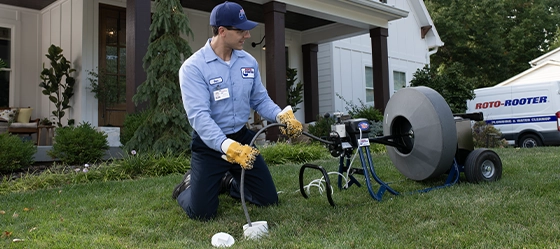
What Causes Newport News Sewer Lines to Fail
The Hampton Roads coastal environment and Newport News' mixed infrastructure history create distinct sewer line failure patterns.
- Coastal soil settlement: The sandy-clay soil beneath Newport News settles unevenly under the weight of development, creating low spots in sewer lines where waste accumulates. Proximity to the James River and tidal creeks means the water table fluctuates with tidal cycles, alternately saturating and draining the soil around buried pipes.
- Septic-to-sewer conversion aging: Many older homes were converted from septic systems to municipal sewer connections using pipe materials and methods of the conversion era. These connections are now 30 to 50 years old, and the original installation quality varies significantly.
- Inflow and infiltration: HRSD has identified private sewer laterals with cracked joints as a primary source of rainwater entering the sanitary system. Groundwater forced through pipe damage during wet weather adds volume that overwhelms the pipe and can cause backups.
- Tree root penetration: Loblolly pines, live oaks, and sweetgums throughout Newport News' established neighborhoods send root systems toward moisture in damaged pipe joints. The sandy-clay soil provides easy root passage, and roots penetrate pipe connections readily.
- Cast iron and clay tile deterioration: Mid-century homes have cast iron or clay tile sewer laterals that corrode and crack after 50 to 60 years of service. The coastal moisture environment accelerates corrosion on cast iron pipe surfaces.
- Hurricane and storm surge effects: Major storm events saturate the ground, overwhelm drainage systems, and can shift soil around sewer line connections. Post-hurricane inspections often reveal damage that accelerated during the event.
Serving Newport News and surrounding communities, Including:
Counties in the Newport News Area
Newport News Neighborhoods and Sewer Conditions
Newport News spans the length of the Virginia Peninsula, and each area presents different underground conditions.
- Hilton Village and downtown Newport News: Historic neighborhoods with homes dating to the early 1900s. Some of the oldest sewer connections in the city run through these streets. Original clay tile laterals and aging cast iron connections have absorbed decades of coastal soil movement and root intrusion.
- Denbigh and Menchville: Mid-century and later suburban development with a mix of pipe materials. Many properties in this area were converted from septic systems, and those conversion-era connections are reaching the end of their service life.
- Oyster Point and City Center area: Mixed commercial and residential development near the James River. The proximity to tidal water creates elevated moisture variability in the soil around buried pipe connections.
- Warwick corridor and Beaconsdale: Established residential neighborhoods with cast iron sewer connections now 50 to 60 years old. The mature tree canopy along residential streets drives persistent root intrusion into aging pipe joints.
- Kiln Creek and northern Newport News: Later development with more modern pipe materials. While the pipes are newer, the coastal sandy-clay soil still settles and shifts beneath these properties over time.

Same-Day Sewer Line Repair in Newport News
Newport News' Trusted Sewer Line Repair Team

SPECIAL FINANCING AVAILABLE
We have partnered with Synchrony Bank to offer financing options to make your plumbing repair expenses as convenient and stress-free as possible.