Commercial Water Heater Services
Commercial water heater failures can force a hotel, restaurant, or gym to close until the system is fixed. Roto-Rooter has serviced commercial-grade systems since 1935, with technicians trained on the tank and tankless equipment that residential crews don't touch
Schedule a commercial water heater assessment before a slow leak becomes a full outage.
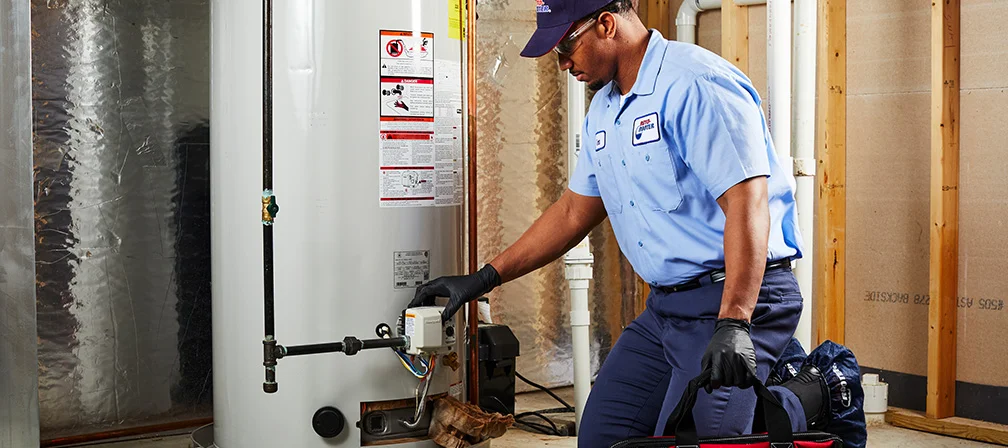
The Roto-Rooter Difference in Commercial Water Heater Service
Commercial water heaters run at higher capacity and see more continuous use than residential units, which means different failure points and different code requirements.
That difference shows up in venting requirements, permitting, and the sustained load a system has to handle without a drop in output during business hours. Roto-Rooter’s technicians work on commercial-grade systems every day, from tank to tankless.
Licensed, Trained Technicians: Experienced with commercial tank and tankless systems of every size.
No Hot Water, No Waiting: A hotel, restaurant, or gym can’t operate without hot water, so these calls get priority dispatch.
Right-Sized Solutions: We assess your actual demand rather than defaulting to a one-size-fits-all replacement.
Stocked for Commercial Jobs: Trucks carry the parts commercial units actually need, not just residential stock.
Signs Your Commercial Water Heater Needs Service
- A commercial water heater usually shows warning signs before it fails outright:
- Inconsistent or fluctuating water temperature
- Rising energy costs tied to an aging unit
- Visible rust, corrosion, or leaks
- Unit is undersized for current demand
- Unit is approaching or past its expected service life
- Commercial water heater unit
Tank vs. Tankless Commercial Water Heaters
A tank system stores hot water and keeps it heated, ready for the sudden demand spike a restaurant or hotel sees at peak hours. A tankless system heats water on demand, taking up less space and running continuously without cycling a stored tank.
A high-volume kitchen with heavy, simultaneous demand often does better with tank storage sized to that peak, since a tank can deliver a large volume of hot water in a short window that a tankless unit's flow rate may not match. A property with steadier, spread-out demand and tighter mechanical room space can be a better fit for tankless, since the smaller footprint frees up space a large storage tank would otherwise occupy.
Recovery rate is the other factor that separates the two. A tank system needs time to reheat the water drawn from it, so a busy period that outlasts the tank's stored volume means a wait for recovery.
Retrofitting an existing building also plays into the decision. A tank replacement can usually reuse existing venting and gas or electric lines. A tankless conversion often requires new venting, larger gas lines, or upgraded electrical service, which adds to the scope of an install even when the unit itself costs less to operate over time.
Roto-Rooter installs and services both tank and tankless commercial systems and sizes the recommendation to how a business actually uses hot water.
Why Commercial Water Heaters Fail
- A commercial water heater breaks down in stages, and each stage has its own signature:
Sediment and Scale Buildup: Continuous, high-volume use lets sediment collect at the bottom of a tank, insulating the burner or element from the water it's supposed to heat and forcing the system to work harder for the same output. In hard-water areas, that buildup accelerates, and scale can also coat a tankless unit's heat exchanger, cutting efficiency the same way it does in a tank.
Thermostat or Heating Element Failure: A failing thermostat or heating element shows up as inconsistent temperature long before the unit stops working completely. On electric units, a heating element can burn out entirely, cutting hot water output while the rest of the system keeps running. On gas units, a fouled pilot, a failing ignition system, or a malfunctioning gas valve can prevent the burner from firing at all, which shows up as a sudden loss of hot water, not a gradual decline.
Tank Corrosion and Anode Rod Depletion: Corrosion inside a tank, accelerated by the near-constant cycling a commercial unit sees, eventually reaches a point where a patch repair no longer holds. The anode rod is built to corrode first and protect the tank itself; once it's depleted, the tank starts corroding directly, and a depleted anode rod is one of the most common causes of a tank failing years before it should.
Pressure Relief Valve Issues: A stuck or failing pressure relief valve is a separate issue, but one that shows up more often on high-cycle commercial units and needs to be caught during routine service before it fails.
Why Commercial Water Heater Downtime Matters
For food service and hospitality businesses especially, a failed water heater can mean an inability to operate. Health codes tie hot water availability to sanitation requirements for dishwashing and handwashing stations, so a water heater failure can shut down service even when every other part of the kitchen is running.
Downtime also compounds. A water heater failure discovered during a busy period often means staff improvising with what's available while waiting for service, which adds strain to other equipment and increases the odds of a second failure on top of the first.
Preventive maintenance is what keeps most of these failures from turning into a closure in the first place. Flushing sediment before it builds up, testing the thermostat and heating element, and checking the anode rod on a regular schedule catches the early-stage signs covered above while they're still a diagnostic visit, before they become an emergency call.
Don’t wait for a total failure. Call to talk to a technician now.
- Roto-Rooter technician inspecting equipment

Commercial Water Heater Services
Gas, Electric, and Tankless Systems We Service
