Food Service Grease Trap Cleaning
Grease trap cleaning prevents the backups and health code violations that can force a kitchen to close. Roto-Rooter has served commercial kitchens since 1935, with technicians who schedule grease trap service around your hours.
Schedule grease trap service before buildup turns into a backup.
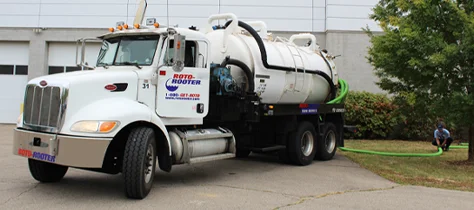
The Roto-Rooter Difference in Grease Trap Cleaning for Restaurants
Grease trap maintenance isn’t optional for a restaurant: it’s a health code requirement and a defense against the kind of backup that can shut down service. Roto-Rooter schedules around your business hours and documents every visit for your compliance records.
Health Code Focus: We understand what inspectors look for and help keep your grease trap in compliance.
Scheduled Around Your Hours: Service timed to avoid disrupting meal service.
Documentation Provided: Records of every cleaning for your compliance files.
Ongoing Schedule: Set a pumping schedule once and stop thinking about it until the next visit.
How a Grease Trap Works in a Restaurant Kitchen
A grease trap sits between the kitchen drain and the sewer line, working on a simple principle: fats, oils, and grease are lighter than water and cool faster once they leave a hot sink or dishwasher. As wastewater passes through, it separates in stages:
- Fats, Oils, and Grease Rise: The lighter grease layer floats to the top of the trap
- Food Solids Settle: Heavier solids sink to the bottom of the tank
- Water Flows On: The layer of water in between continues to the sewer line
That separation only works as long as the trap has room for it. Once the grease layer and the solids layer take up too much of the tank, wastewater no longer has space to separate before it moves on, and grease starts passing through into the line it was supposed to protect.
Grease Trap Cleaning Services for Restaurants*
- Roto-Rooter provides the full range of grease trap services a restaurant kitchen needs:
- Grease trap cleaning and pumping: Regular removal of fats, oils, and grease
- Grease trap repair and replacement: Address leaks, cracks, or undersized systems
- Grease trap installation: For new builds or system upgrades
- Custom pumping schedules: Based on your kitchen’s actual volume
*Service offerings vary by location. Some locations do not provide pumping services.
What Happens to Grease Trap Waste After Pickup
Pumped grease doesn't just disappear. Roto-Rooter transports the fats, oils, and grease removed from a trap to licensed processing facilities. Keeping that waste out of the sewer system is what keeps a restaurant's own line, and the municipal line downstream, from backing up in the first place.
Looking for grease trap service outside a restaurant kitchen? Grease Trap Services covers that broader scope.
Stop worrying about your next inspection. Contact Roto-Rooter to schedule grease trap service and talk to a technician now.

Warning Signs a Restaurant Grease Trap Needs Cleaning
What Happens When a Restaurant’s Grease Trap Is Neglected
