Hydro Jetting in Portland
Key Takeaways: What a Mild Winter Does to Where the Pipe Sits
- How deep a sewer line is buried is decided by frost, and a maritime winter asks for very little depth, so a run here sits nearer the surface than the same pipe would in a cold state.
- That places the line inside the layer of soil where root systems actually work rather than well below it, which is the single most useful thing to understand about drains in this city.
- A cutter head removes the root mass and leaves the fine hair anchored in the joint, along with the grease and paper caught on it. Both are the start of the next blockage.
- Hydro jetting scours the full circumference of the pipe with high-pressure water, so the hair and everything held by it leave the run rather than staying behind as a foundation.
- A video camera inspection comes first, to find which joints are open and to establish the pipe is sound enough to clean under pressure.
- Grease and mineral scale in older cast iron are separate findings again, with separate answers, and only the footage tells them apart.
- Some lines are not candidates. A collapsed length, a badly offset joint, or a wall thinned by long corrosion needs a repair conversation instead of a hose.
- Roto-Rooter is fully licensed and insured, and answers in Portland 24/7, 365 days a year.
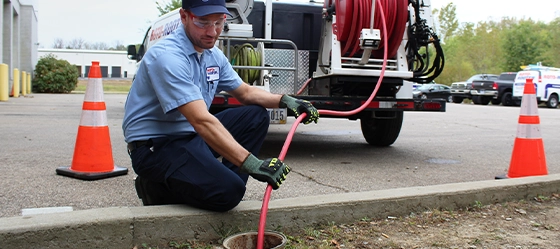
Two identical houses, one here and one in the Upper Midwest, do not have their sewer lines in the same place. Burial depth is dictated by frost, and a maritime winter barely produces any, so a lateral in Portland runs comparatively close to the surface while the same pipe in a cold state is set several feet lower. Nobody chooses this. It is the code doing exactly what it should. The consequence is what matters: the run here shares its ground with the roots.
Root systems do most of their work in the upper soil, where the water and the air are. A pipe buried below that layer is a target of opportunity. A pipe buried inside it is a permanent neighbor, and in a climate with a long, wet growing season and an extensive mature canopy, that is a relationship rather than an incident. Which is why the useful question in this city is rarely whether roots will find a joint, and almost always what to do about it on an ongoing basis.
Why the Line Under a Mild Climate Is a Shallow One
Depth of cover exists to keep a pipe below the frost line, and a run that never sees hard freezing does not need much. Two other things follow from that shallowness, and they are worth knowing. The first is that the line is closer to whatever the surface carries, so a driveway poured over a lateral, a vehicle parked where one was not expected, or a heavy delivery across a soft yard reach the pipe more readily than they would elsewhere.
The second is access, and it cuts in your favor. When a camera does find something structural, reaching it in Oregon means less excavation than the same repair would in a deep-frost market. That does not make digging pleasant or cheap, but it does mean the choice between cleaning and repair here is a genuine choice rather than a foregone conclusion.
What Hydro Jetting Does at Root Depth
A jetting hose carries a nozzle that directs high-pressure water backward against the pipe wall while the hose is drawn through the run. The scour covers the whole circumference rather than a hole through the middle of the obstruction, and because the jets face behind the nozzle they drive what they lift toward the main instead of packing it further in. Root hair is stripped from the joint it entered by. Grease that cooled and set along the crown comes away. Sludge in a flat stretch is flushed rather than pushed along. Mineral scale in older cast iron is cut back toward the original bore, which is the descaling half of the work.
The cutter head and the hose are not rival tools on a line like this. The cutter takes the mass out and gives you flow back in minutes, which is what a household needs when everything has stopped. The hose removes what the cutter cannot: the fine material still anchored in the seam and the coating on the wall either side of it. Skipping the second half is what shortens the gap before the next call.
Serving the entire Portland metro area, Including:
Counties in the Portland Metro Area
The Findings That Outrank a Cleaning Recommendation
Shallow ground makes the repair conversation more available here than in most markets, and three findings move a line straight into it. A collapsed section has nothing left to clean. A joint separated far enough to leave a step will catch a hose, and the fault at that point is structural rather than anything a cleaning addresses. A wall corroded thin may not take pressure at all. The camera exists to establish which of those is present in an Oregon lateral before anybody unrolls anything.
There is a version of this specific to a root-prone market, and it deserves saying plainly. Cleaning removes what is in the pipe, but the opening the roots came through is still an opening. Where the camera shows a joint that has separated or a length cracked along its run, a cleaning schedule is a way of living with a defect rather than a fix for it. High-pressure water cleans a pipe. It does not restore one, and a technician who has watched the footage will tell you which conversation you are actually in.
Will Hydro Jetting Keep Roots Out for Good?
No, and any company that says otherwise is overselling. Cleaning removes the root hair and the material it collected, which restores the bore and resets the clock. It does not close the seam the roots came through, and it does not remove the tree. What it buys is time, and how much time depends on how many joints are open and how vigorous the growth above them is.
What makes that a plan rather than a guess is the footage. A Portland homeowner with a recorded baseline can compare against it at the next visit, see how quickly the run actually refilled, and set an interval from evidence. A line with one modest intrusion at a single joint can go a long time untouched. A run with several open seams under an established tree is a different case, and the difference is worth knowing before choosing between an interval and a repair.
Commercial Runs and the Weight of a Daily Load
A house lateral and a commercial kitchen run carry different diameters, different daily loads, and very different consequences when they close. A cleaned residential line in Portland can go years before it needs attention again, depending on what fouled it. A kitchen putting cooking waste through the same pipe every service is working against a known accumulation rate on top of anything the yard is doing, which is why food service operators across Oregon settle on a planned interval rather than waiting for a failure in the middle of dinner.
Roto-Rooter handles both. For the wider set of plumbing work across a property, the Portland plumbers page is the place to start.
Access on a Narrow Lot With a Long Yard
A technician locates the cleanout, runs the camera, and talks through what is on the screen before anything else happens. If the run is a candidate, the hose goes in, the pipe is cleaned back through the affected stretch, and the camera goes down a second time so the wall can be seen rather than described. Roto-Rooter provides on-site estimates before any work begins, so nothing proceeds until the scope has been agreed.
Access is the practical variable on the deep, narrow lots common across older Portland neighborhoods. A cleanout in a reachable spot makes for a straightforward appointment, while one under thirty years of planting, behind a rebuilt fence, or never fitted at all changes the approach. Mentioning what you can find when you call saves time on the day. If a line is actively backing up rather than slowly closing, start with emergency plumbing help in Portland, because restoring flow comes first and the cleaning conversation follows.
Schedule an Inspection in Portland Before the Rain Returns
Roto-Rooter has been cleaning sewer lines since 1935 and is fully licensed and insured. Call 503-937-1993 or schedule online to have the line looked at and cleaned, and get the plumbing peace of mind that comes from knowing what is in the run rather than guessing at it. Roto-Rooter answers 24/7, 365 days a year.

Symptoms Worth Acting On Before the Wet Season
A Canopy That Stays, and a Growing Season That Runs Long

SPECIAL FINANCING AVAILABLE
We have partnered with Synchrony Bank to offer financing options to make your plumbing repair expenses as convenient and stress-free as possible.