Food Service Plumbing
Food service plumbing problems don't wait for a slow night. Roto-Rooter has supported food service operators since 1935, with technicians who know grease traps, drain systems, and the codes that keep a kitchen open.
Schedule a commercial service consultation and keep your kitchen running.
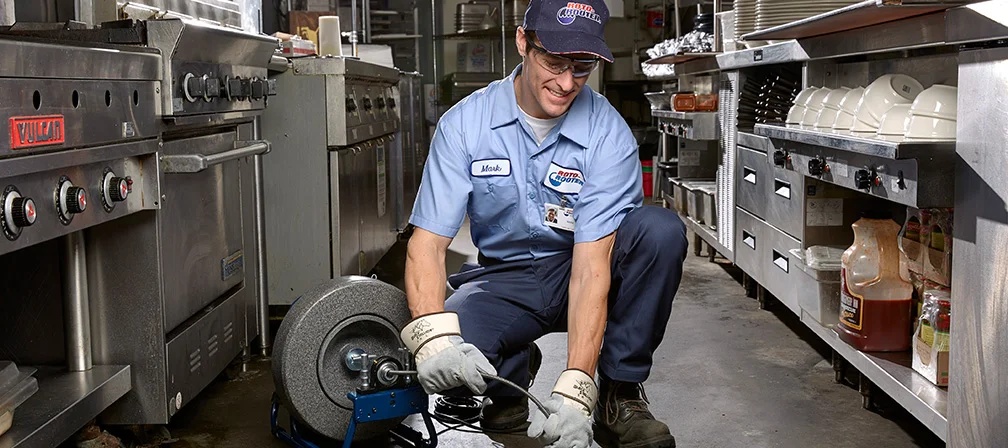
The Roto-Rooter Difference in Food Service Plumbing
Roto-Rooter has served food service operators for decades, and we understand what’s actually at stake when a drain backs up an hour before the dinner rush.
We Know What’s at Stake: A closed kitchen means lost revenue and refunded reservations. Our dispatch prioritizes food service calls accordingly.
Health Code Fluent: Our technicians speak the language of health inspectors, from grease management to drain sanitation, not just plumbing.
Multi-Location Ready: Run one restaurant or a regional chain, and get the same standard of service and scheduling flexibility at every address.
One Vendor, Every Service: Grease traps, drains, water heaters, and backflow testing, all from a single trusted provider.
Common Food Service Plumbing Problems
Restaurants put more strain on plumbing systems than almost any other commercial property type. Grease, food solids, and constant high-volume use create failure points that don’t exist in a typical office building.
- Grease-related drain and floor drain backups
- Dishwasher and pre-rinse station clogs
- Health inspection failures tied to plumbing or drainage issues
- Water heater capacity problems during peak service hours
- Cross-contamination or backflow concerns in kitchen plumbing
Health Code Compliance for Restaurant Plumbing
What's happening in the pipes decides a health inspection as often as what's happening on the counters. Grease trap capacity, floor drain condition, and backflow protection are all plumbing issues that show up on an inspector's checklist.
An undersized or overdue grease trap is one of the most common plumbing-related findings on a failed inspection, and standing water or a slow-draining floor drain creates the kind of sanitation issue inspectors flag on sight. Cross-contamination risk from backflow is a food-safety concern with real consequences, and every visit comes with records you can keep on file for your own compliance documentation.
Roto-Rooter's technicians build these checks into routine service calls. Grease traps also need regular cleaning to keep working, and our food service grease trap cleaning service keeps them on schedule.
Why Restaurants Choose Roto-Rooter
- Food service operators stick with Roto-Rooter for a few consistent reasons:
- Scheduling built around business hours
- Documentation provided for health inspection records
- Technicians trained specifically on commercial kitchen systems
- A single point of contact for every plumbing need in the building
Keep your kitchen running. Contact Roto-Rooter to schedule a commercial service consultation, and talk to a technician now.

Food Service Plumbing Services
Preventive Maintenance for Food Service Plumbing
