Commercial Backflow Repair
A failed backflow test, persistent leak or damaged assembly needs a clear repair plan. Roto-Rooter repairs existing backflow preventers, from a single worn part to a full assembly rebuild to ensure your business is flowing properly all year long. Schedule with our commercial experts for same-day service.
Share your test report, describe any leakage and tell us about access or water-service concerns when you call. Your local team can confirm available services and help you plan the next step.
Backflow preventers must be inspected periodically depending on your jurisdiction. A failed preventer can lead to fines and / or the building’s water being shut off if not treated properly.
Proudly offering 24/7 emergency services and same-day availability.
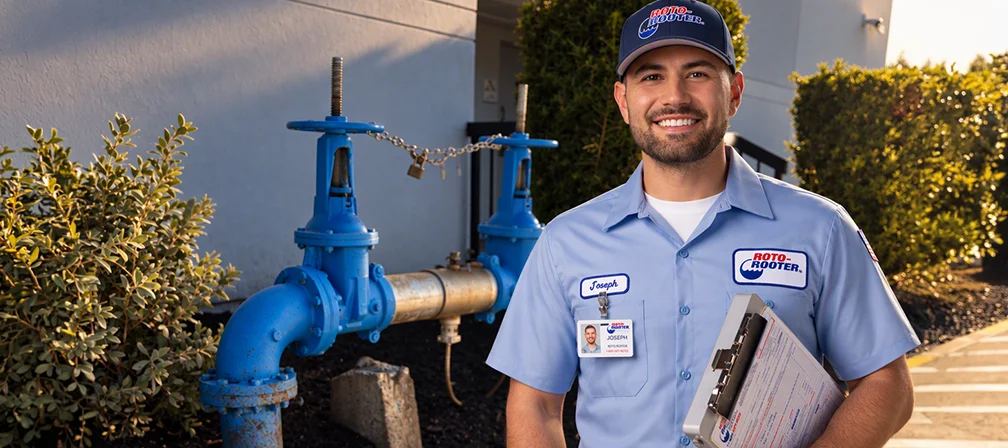
Signs a Backflow Preventer Needs Attention
Contact your service provider if an assembly fails a test, develops a leak or shows damage. Corrosion, a change in water pressure or unusual noise also deserves evaluation, although those observations alone do not identify a failed component.
What You See Depends on the Assembly
A reduced pressure zone (RPZ) assembly has a relief valve that can discharge water when pressure conditions change or a check valve is not working correctly. Persistent or unexpected discharge needs evaluation. Never plug the relief opening to stop the water.
A double check valve assembly has no relief valve and can fail internally without an obvious external sign. That is why a clean exterior does not replace the performance testing required for a testable assembly. Share both visible concerns and test findings so the service team can investigate the cause.
Explore Commercial Backflow Services
Backflow services | Testing | Inspection | Installation | Repair
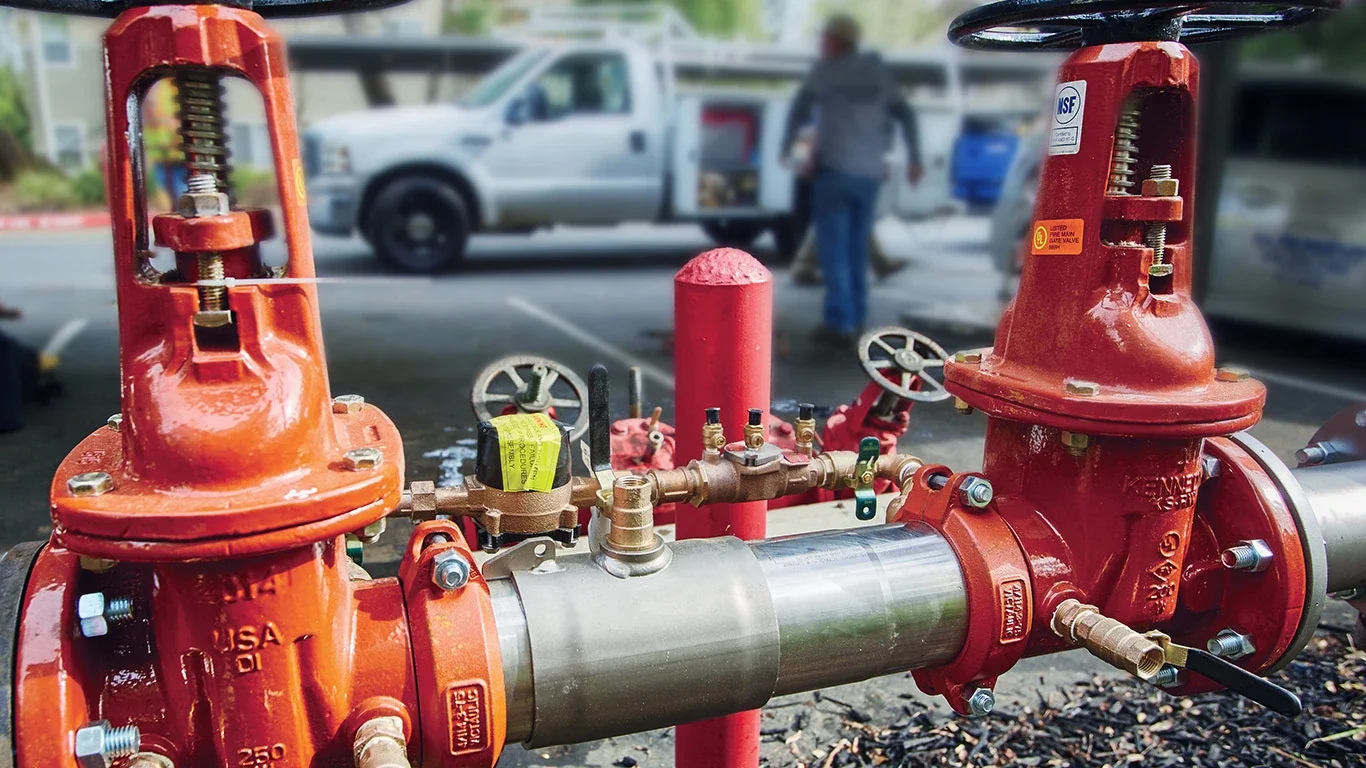
Repair Options for Your Backflow Assembly
What Happens After a Repair?
Backflow Repair - Customer Reviews
Frequently Asked Questions
Why did my backflow preventer fail its test?
Common causes include worn internal valve parts, debris in the device, corrosion, or freeze damage. A technician can diagnose the specific cause.
Can a backflow preventer be repaired, or does it need to be replaced?
The cause and the device's condition determine the answer. Many issues can be repaired in place; a device that fails repeatedly or is significantly corroded is usually better replaced.
Is a repaired backflow preventer tested again afterward?
Post-repair testing and reporting depend on the assembly and local requirements. Your service team can explain the checks needed to verify operation and any documentation your water provider requires.
How quickly can a failed backflow preventer be repaired?
Roto-Rooter is available 24/7, 365 days a year, for commercial plumbing issues; a technician can assess timing for your specific situation when you schedule service.
Can a backflow preventer be repaired without shutting off water to the entire building?
The water interruption depends on the assembly's location and the property's piping arrangement. A technician can assess the setup and confirm which water supply needs to be shut off for the repair.